
Trivia Planet!
VOODOOTrivia
3.5316.00 Reviews
- Version
- 1.19
- Installs
- 1.00M
- Age Rating
- Everyone
Screenshots
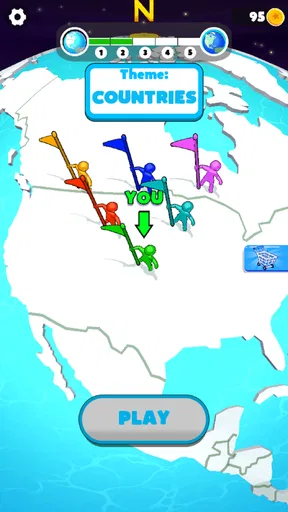
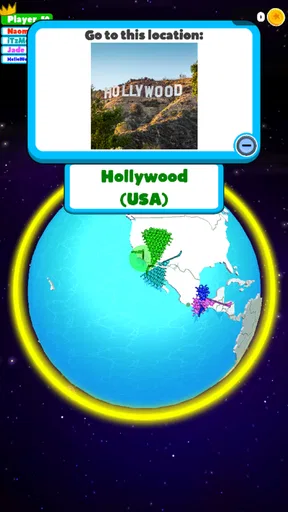
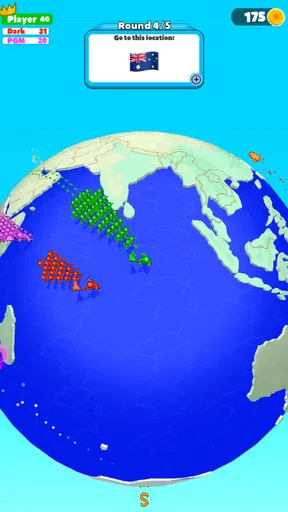
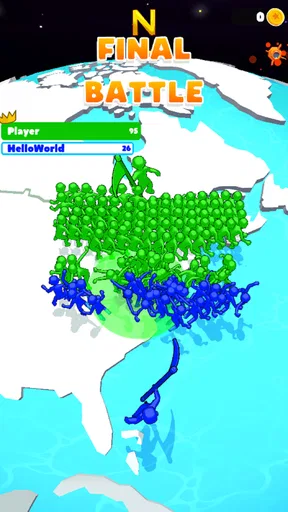
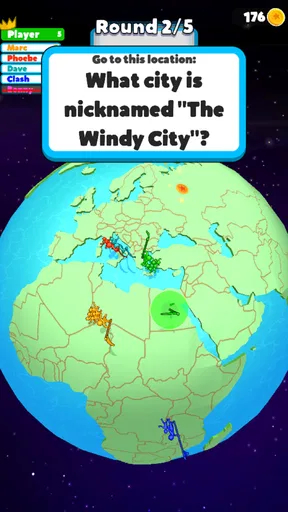
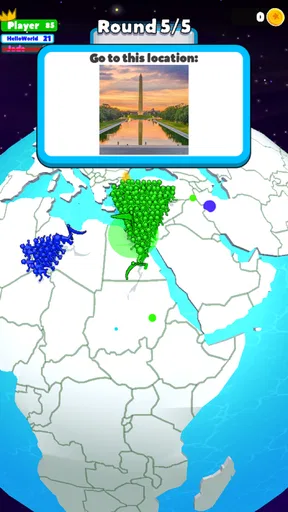
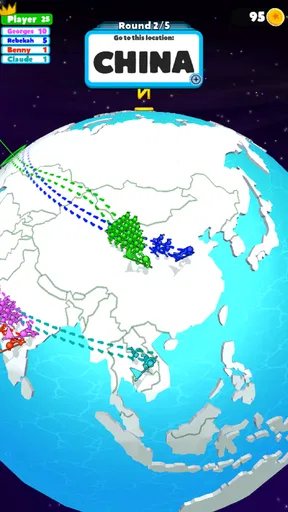
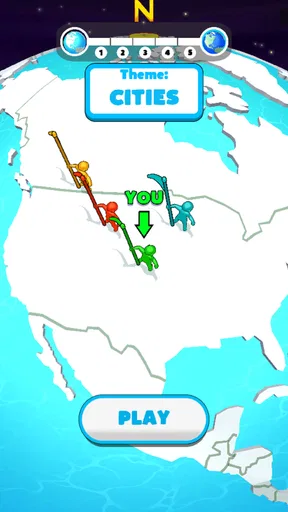
Our Review of Trivia Planet!
 Analysis by Appyee
Trivia Planet! is the kind of mobile game I reach for when I want a short burst of general-knowledge questions rather than a long campaign or a complicated rule set. Developed by VOODOO, this free trivia game presents itself as a way to explore the world through questions, and that simple idea is easy to understand from the first session. I found it approachable, quick to start, and suitable for casual play, although its appeal depends heavily on whether you enjoy repeated quiz rounds more than deep progression systems.
It is listed for Everyone, which fits the broad, accessible nature of the concept. The game has passed one million installs, so it has clearly found an audience beyond a small group of quiz fans. Its average rating sits at 3.5 from roughly 2.7 thousand ratings, a result that suggests a mixed but meaningful reception rather than universal enthusiasm. My impression is similar: there is a pleasant, low-commitment trivia experience here, but it is not automatically the best choice for every kind of player.
How the quiz experience feels in ordinary play
The strongest part of Trivia Planet! is its immediacy. I do not need to learn a complicated control scheme or spend time arranging a team before answering questions. That makes it a natural fit for small gaps in the day: waiting for an appointment, taking a short break, or playing a few rounds before putting the phone away. The world-exploration theme gives the questions a sense of direction, while the trivia format keeps the interaction familiar.
That simplicity also creates an important trade-off. A game built around answering questions can be satisfying when the topics match my interests, but less engaging when a run contains material I do not know or do not care about. Unlike a story-driven game, it cannot rely on characters, atmosphere, or a developing plot to carry a slow moment. The questions have to do most of the work, so the quality and variety of the quiz content matter more here than visual decoration.
I would describe the presentation as best suited to players who like quick decisions. If you enjoy testing what you already know, guessing under light pressure, and noticing gaps in your knowledge, the format has an easy rhythm. If you prefer puzzles with one carefully reasoned solution, a narrative adventure, or a strategy game where planning matters more than recall, this may feel too lightweight.
One practical tip is to treat each session as a small learning check rather than a serious exam. When I miss an answer, the useful part is not simply the wrong result; it is the chance to notice which subjects I routinely confuse. That makes the game more rewarding when I play with curiosity instead of chasing a perfect run every time.
Progress feels better when the session has a purpose
Trivia games can become repetitive if every round is approached in exactly the same way. I get more value from Trivia Planet! when I give a session a clear purpose: warming up my general knowledge, challenging a friend informally, or seeing whether a familiar subject is really as strong as I think it is. This small change prevents the experience from becoming a mindless sequence of taps.
It is also worth paying attention to the difference between confidence and knowledge. A fast answer can feel satisfying, but speed does not always mean certainty. I found that the most useful moments were often the questions where I narrowed down two possibilities and had to make a deliberate choice. Players who rush every answer may enjoy the pace, but they may also turn the game into reflexive guessing.
For families, the Everyone rating makes the game easier to consider as a shared casual activity. Still, younger players and adults may approach the same question differently, so I would not treat a mixed-age session as a strict competition. A better use is to discuss why an answer seems right and let each person contribute knowledge from a different area.
The game runs on Android devices using version 8.0 or later, and the current version is 1.19. That makes the compatibility requirement fairly clear for anyone checking an older phone before installing. I would still think about screen size and battery habits in everyday use, because trivia is most enjoyable when the interface feels comfortable and a short session does not become an excuse to keep playing longer than intended.
Spending, pressure, and the question of value
Trivia Planet! is free to download, but it includes in-app purchases priced at $3.99 per item. That is the main point I would consider before recommending it to someone who wants a completely unrestricted free experience. The purchase information establishes that optional paid items exist, but it does not by itself explain exactly what each item changes during play. I would therefore avoid buying anything immediately and first decide whether the unpaid experience is already enjoyable.
This is especially important in a trivia game because spending can affect how fair the challenge feels if paid items influence attempts, progress, or access to content. I cannot responsibly promise that purchases have no effect on competition, nor can I claim that they create an advantage. The sensible approach is to regard the purchase system as a factor to inspect in the game before spending, particularly if the device is shared with children.
My recommendation is simple: play several sessions, notice whether the core questions hold your attention, and only then consider an optional item. A purchase should solve a problem you have actually encountered, not be an automatic part of starting the game. If you are looking for a trivia app that is entirely free of purchase decisions, another option with a clearly defined no-purchase model may suit you better.
There is also a psychological form of spending pressure worth mentioning. Quiz games can make players feel that one more round will repair a disappointing result or recover lost momentum. I find it healthier to stop after a frustrating streak rather than respond by spending or playing impatiently. Trivia rewards a calm mind more than a long session, and no paid item can replace knowing when to take a break.
Fairness depends on what kind of competition you want
For solo play, fairness mostly means that the questions feel understandable, the answers are not misleading, and progress does not become frustrating for reasons unrelated to knowledge. Without treating every mistake as a design flaw, I would pay attention to whether the game teaches me something after I miss a question. A quiz feels fairer when errors become useful information instead of simply blocking progress.
Competitive fairness is a more complicated issue. Players can have very different backgrounds, languages, education, and interests, so a general trivia game will naturally favor some people on certain subjects. That is not necessarily a problem, but it means a high score should not be treated as a complete measure of intelligence. In a group, I would use the game as a friendly challenge and avoid turning one difficult category into a judgment about who knows more.
The purchase system adds another layer to that question. Since the game has paid items, I would be cautious about comparing results between players unless everyone is using the same conditions. The available facts do not establish whether purchases affect competitive outcomes, so I would not present Trivia Planet! as a guaranteed level playing field for serious head-to-head competition. For relaxed comparison, it can work; for a formal contest, I would choose a platform with explicitly documented competitive rules.
Another fairness issue is the difference between memory and research. If I play while searching for answers elsewhere, the result no longer represents the same challenge as playing from personal knowledge. That may be fine for a learning exercise, but it changes the purpose of the session. I prefer to keep the first attempt honest, then discuss or look up the topic afterward if a question sparks genuine interest.
Useful ways to fit it into a routine
A realistic everyday scenario would be a short evening session with a family member. Instead of treating the game as a winner-takes-all contest, each person can answer independently and explain the reasoning behind uncertain choices. The conversation afterward becomes part of the entertainment, especially when someone knows a surprising fact but cannot recall it quickly under pressure.
Another good use is a personal “weak spots” routine. I might play a few rounds, remember the subjects that caused the most hesitation, and then use those misses as prompts for later reading. This turns Trivia Planet! into a doorway to broader learning rather than a closed loop of right and wrong answers. The tip is simple but effective: do not only celebrate correct answers; keep track of the questions that made you curious.
I would not use it as a substitute for structured study. A trivia game can expose gaps and reinforce familiar facts, but it is not the same as a course, flashcard system, or reference book. If I needed reliable preparation for an exam, professional qualification, or language goal, I would choose a tool designed around that purpose. Trivia Planet! works better as a light supplement than as a complete learning plan.
It can also be useful for breaking up passive screen time. Watching videos can easily turn into an hour without active participation, while a quiz asks me to make a decision every few moments. That does not make it automatically more productive, but it does make the attention feel more deliberate. The limitation is that active answering can still become repetitive if I play beyond the point where the questions are enjoyable.
Where it differs from other trivia choices
Compared with a traditional quiz app focused on a single subject, Trivia Planet! is more appealing when I want variety and a broad world-oriented theme. A specialist alternative is better if I want to practice one area systematically, such as history, science, spelling, or a language. The broader approach is welcoming, but it may not provide the focused repetition needed to build expertise.
Compared with multiplayer quiz platforms built around live matches, this game is a better fit for private, low-pressure play unless its own competitive options clearly meet your needs. Live alternatives often make the social element central, bringing timers, opponents, and public results into the experience. That can feel exciting, but it can also make a quiet five-minute session harder to control. I would choose Trivia Planet! when I want the quiz itself to remain the main event.
Compared with educational games for children, its Everyone rating makes it approachable, but age suitability is not the same as educational depth. Parents looking for a carefully sequenced learning tool should inspect whether the content matches a child’s level rather than assuming that general trivia will teach in a structured way. For shared family entertainment, the concept is easier to recommend than for formal instruction.
Compared with paper quiz books or a standard web search, a mobile game offers faster feedback and a more playful reason to keep answering. The trade-off is that printed or reference-based alternatives usually give me more control over topics and explanations. If I want to investigate a subject deeply, I would move beyond the game after a question catches my attention.
What I would check before installing or spending
The first check is device compatibility: Android 8.0 or newer is required. The second is expectation setting. This is a free trivia game from VOODOO, not a replacement for a full educational platform, so I would install it for quick general-knowledge sessions rather than a structured curriculum.
The third check concerns purchases. Because individual in-app items cost $3.99, I would review the purchase prompt carefully and make sure the device owner understands what is being bought before confirming anything. The listed purchase price is clear, but the practical value depends on what the item provides inside the game. I would not assume that paying improves knowledge, guarantees progress, or changes competitive fairness.
I would also ask myself whether I enjoy uncertainty. A trivia game can be more frustrating than relaxing when I dislike getting answers wrong. If mistakes bother me enough to make every round feel like a test, a cooperative quiz or a puzzle game with unlimited experimentation may be a better match. On the other hand, if I enjoy learning through occasional failure, the same uncertainty becomes part of the appeal.
The current version, 1.19, is useful to note when comparing the game with older reviews or screenshots, since mobile products can change over time. I would judge the present experience through actual play rather than relying only on an old opinion. That is particularly relevant for a game where small changes to question flow, progression, or purchase presentation could affect how fair and comfortable it feels.
My trust verdict after weighing the trade-offs
My overall view is cautiously positive. Trivia Planet! succeeds as an easy-to-start general trivia game, especially for short sessions and informal family play. Its free entry point removes the biggest barrier to trying it, and the broad concept gives me enough flexibility to return when I want a quick mental break. The large install base also shows that the format has reached plenty of players, although popularity alone does not settle whether it will fit your habits.
I would recommend it to someone who wants casual questions, does not need a formal learning system, and is comfortable making a personal decision about optional purchases. I would be more reserved with a player seeking serious competition, guaranteed purchase-free play, or a carefully organized course. The 3.5 average rating reflects that middle ground well: there is a worthwhile idea here, but the experience is not so universally polished or compelling that I would recommend it without conditions.
My practical verdict is to try the free version first, keep competition friendly, and treat every paid item as optional until its purpose is clear. That approach gives the game room to be enjoyable without asking you to trust assumptions about fairness or value. If the questions make you curious and the short-session format fits your routine, Trivia Planet! can become a pleasant pocket quiz. If you need depth, transparent competitive rules, or focused study, I would choose a more specialized alternative.
In the end, the game’s best quality is also its clearest boundary: it makes trivia easy to pick up, but it does not need to become more than that. I like it most when I use it as a brief challenge, a conversation starter, or a prompt to learn something beyond the screen. With that expectation, Trivia Planet! is a reasonable free download for casual quiz fans, provided they remain mindful of the purchase options and their own tolerance for repeated question-based play.
Verdict
Strengths of Trivia Planet!
- Wide range of trivia categories keeps quizzes varied.
- Simple interface makes the game easy to start playing.
- Short rounds are convenient for quick breaks.
- Helpful feedback lets players learn from incorrect answers.
- Competitive elements add motivation for trivia fans.
Limitations of Trivia Planet!
- Some questions may feel too easy for experienced players.
- Difficulty and question quality can vary between categories.
- Progress may depend heavily on repeated play sessions.
- Ads can interrupt the experience for free users.
- An internet connection may be needed for certain features.
Other Releases by VOODOO
View All


Similar Picks in This Category
View All
Millionaire 2026 Quiz & Trivia
Quiz & Trivia Games by Submarine Apps4.5

Brain Test 2: Tricky Stories
Unico Studio4.7

Trivia Crack: Brain Quiz Games
etermax4.4

QuizzLand. Quiz & Trivia game
Quiz & Trivia Games by Mno Go Apps4.8

Brain Test: Tricky Puzzles
Unico Studio4.7

Logo Quiz
bubble quiz games4.5
Frequently Asked Questions
What is Trivia Planet!?
Trivia Planet! is a quiz and general-knowledge game designed for players who enjoy answering questions across different categories. During my review, the app presented a straightforward format: choose or enter answers, earn points, and progress through trivia challenges. It is suitable for short sessions, whether you want to test yourself casually or compete for better scores over time.
What types of questions and categories are available in Trivia Planet!?
Trivia Planet! includes questions covering a variety of common trivia subjects, such as history, science, geography, entertainment, sports, and general knowledge. The exact selection may vary depending on the version and available game modes. Some questions are easy and familiar, while others require more detailed knowledge, making the experience accessible to beginners but still challenging for experienced quiz players.
Is Trivia Planet! free to download and play?
Trivia Planet! can generally be downloaded at no initial cost, although the available features may depend on the platform version and app configuration. Free access may include advertising, optional purchases, or limitations on certain content and gameplay elements. Before downloading, check the Google Play Store or Apple App Store listing for current pricing, in-app purchase details, subscription terms, and supported devices.
Does Trivia Planet! require an internet connection?
An internet connection may be needed for downloading the game, receiving updated question content, displaying advertisements, synchronizing progress, or using online features such as leaderboards and competitions. Some parts of the game may work offline, but this can vary by device and version. If you plan to play while traveling, test the app beforehand rather than assuming every mode is available without connectivity.
Is Trivia Planet! suitable for children and families?
Trivia Planet! can be enjoyable for families because quiz gameplay is easy to understand and encourages learning through general-knowledge questions. However, parents should review the store age rating, advertising behavior, in-app purchase settings, and any online or competitive functions before allowing younger children to play. Question difficulty and subject matter can vary, so adult supervision may be appropriate for younger users.
Play our best games!


